Guide
Open-Ear Face Mask vs Balaclava — Which One Should You Get?
A balaclava covers your whole head and both ears; an open-ear face mask covers face + head but leaves ears fully exposed. Choose open-ear when you need to hear traffic, teammates, headphones or hearing aids — most everyday outdoor use.
The face-mask category is confusing because "balaclava," "face mask," "neck gaiter," and "ski mask" all describe overlapping products. The one useful distinction: does it cover your ears or not? That single design choice defines whether you can hear your surroundings and use headphones. Here's how the two categories compare, and when to pick each.
The face-mask category is confusing because "balaclava," "face mask," "neck gaiter," and "ski mask" all describe overlapping products. The one useful distinction: does it cover your ears or not? That single design choice defines whether you can hear your surroundings and use headphones. Here's how the two categories compare, and when to pick each.
What's an open-ear balaclava?
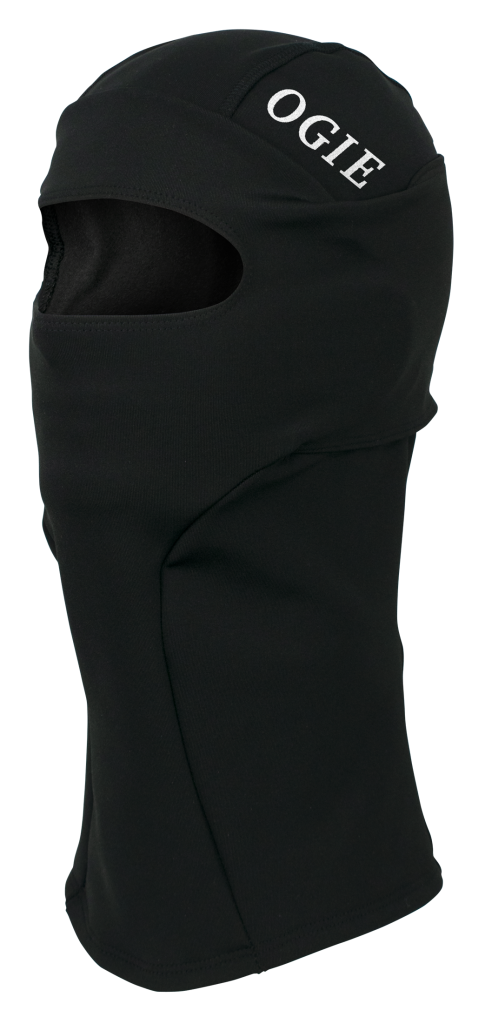
It's a balaclava-style face + head covering with the ear panels removed or cut out. Face and forehead are covered, ears are fully exposed, hearing is unmuffled. Ogie is the best-known example.
When is a full balaclava better?
Extreme sub-zero mountaineering, motocross where wind noise is deafening anyway, or scenarios where you specifically want your ears warm (arctic conditions, ice fishing sitting still). For 90% of outdoor use, open-ear wins.
Does open-ear mean your ears get cold?
Only in extreme cold. For 90% of outdoor use — commuting, walking, cycling, running, hiking — your ears are fine and the tradeoff (hearing everything clearly) is worth it. Layer a beanie or ear-warmer over the top for sub-zero conditions.
Is Ogie an open-ear balaclava or a face mask?
Technically both — it's a balaclava-style piece with the ear cutouts of a face mask. Marketed as a "face mask with open ears" because that's the clearest description of what it does.
What about a neck gaiter pulled up?
A neck gaiter pulled up as a face mask doesn't cover your forehead, slips off, and traps damp breath. A proper open-ear face mask is worth the upgrade the first cold morning you use one.
Do open-ear masks work in wind?
Yes — the face + forehead coverage is what blocks wind. Your ears get some wind exposure but for most people that's tolerable at normal outdoor temperatures.
Which weight for what use?
Lightweight for warm-weather use and high-output activity. Mediumweight for cool mornings and everyday winter. Heavyweight for genuinely cold conditions and low-output activity (hunting, skiing, dog walks).